Branches crowding a building
What's behind it: Branches might have grown into areas where they obstruct structures.
What we check first: Assess branch clearance and determine the pruning required to resolve the issue.
We agree on the scope and the price first, then do the work as quoted, free quotes across Dubuque and nearby.
Fast Scheduling
A two-minute call is all it takes, no pressure, no obligation.

No obligation
Call (563) 227-0307From here
A limb has been hanging over the garage since last winter, or a trunk split in a wind and nobody wants to guess what dealing with it will cost. We prune and remove trees across Dubuque, from one overgrown maple to a whole lot, and the visit comes first, so the quote matches the tree you actually have. What you get from that visit is a written quote saying what we'd cut, how we'd get it down, and what it costs. You may also learn the tree can stay as it is.
Tree work isn't priced by the tree. It's priced by what it takes to get that tree on the ground without putting a limb through your roof.
Height alone doesn't set the price. One tree stands alone in a back lot. Another has overhead lines running past the crown and a garage close to the drop zone. The price rises with how much of the tree is coming down, how near the house and the lines sit, and how far the trunk leans. It rises again if pieces have to be rigged down a section at a time instead of dropped straight to the ground, or if the ground is too soft to carry equipment back there.
Every one of those factors is on the quote. The quote says what comes down, what stays, and how we're getting into the site, so you aren't left guessing at what the number covers.
Before anyone ties in, we walk the ground under and around the tree: overhead lines, damaged limbs, lean, nearby structures, traffic, and soft or unstable ground. Next we look at how healthy the tree is and how its trunk and limbs are put together.
That second check matters because a tree has to carry the load. Climbing, rigging and cutting all put weight on it. A tree can look fine and still be too compromised to take that weight, and we'd rather find out standing on the ground than hanging from the top.
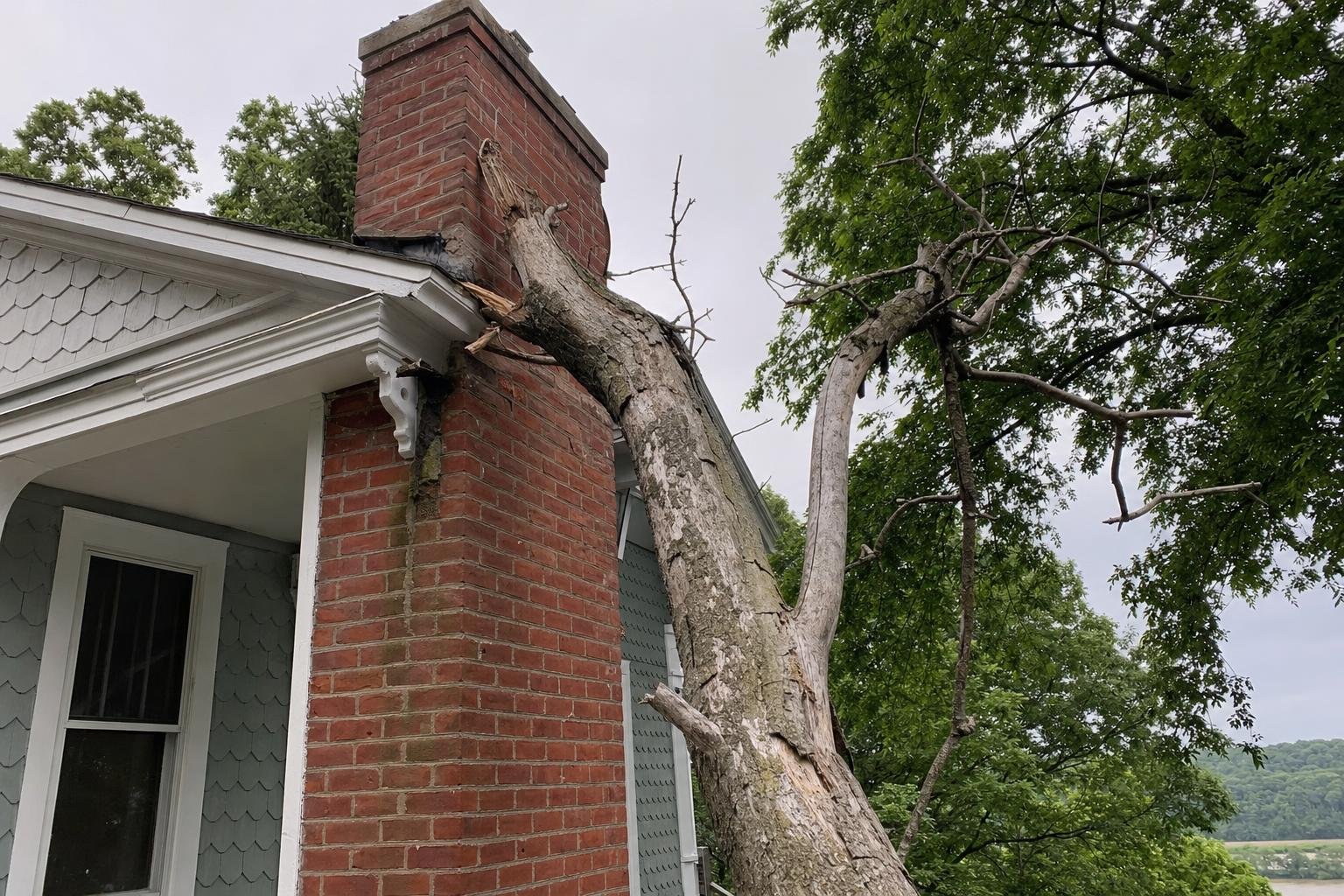
We plan the access around the house itself. Nearly three-quarters of the homes in Dubuque were built before 1970, so the house next to your tree is probably an older one. Many are wood-frame with wood cladding, and plenty are brick or limestone masonry. Siding and masonry walls need different protection from falling limbs and rigging lines, so we decide which we're working around before the first cut.
Stumps and equipment are the other concern. Older foundations here are often concrete, brick or local limestone. We check for a masonry foundation before stump work or heavy equipment gets close to the house.
Give us the address and the problem, whether it's the limb, the lean or the split trunk. Then we book the walk-through of the site. Nothing needs settling on the phone. The decision comes after you've read the written quote, and if the tree doesn't need to come down yet, the quote says so.
Tap whichever one sounds most like your situation.
So you know what you're looking at before anyone shows up.
What's behind it: Branches might have grown into areas where they obstruct structures.
What we check first: Assess branch clearance and determine the pruning required to resolve the issue.
What's behind it: Branches might be dead, diseased, weakened, or storm-damaged.
What we check first: Inspect the affected branches and their attachments.
What's behind it: A noticeable lean can indicate instability, and root disturbance, decay, or weak connections may lead to tree failure.
What we check first: Check the tree’s lean, roots, trunk, and major branch connections.
What's behind it: High winds or storms can break branches or bring down trees.
What we check first: Assess the damaged tree and nearby hazards before deciding what to prune or remove.
These are ballpark figures to plan around, and we'll tell you which end of the range yours is likely to sit at.
$25–$95
$150–$425
$425–$1,150
Here's what to expect once you reach out.
Describe the job and your timing, and we'll give you an honest read, not a sales pitch.
We look at the job on site before anything gets priced.
You get the scope and the price in writing before you agree to anything.
We do the work as quoted, and we walk you through what was done.
Some municipalities or nonprofits offer free or discounted tree removal for seniors, but availability varies. Check local programs, community aid groups, or utility companies (if trees threaten power lines). Most standard tree services charge market rates, so inquire about senior discounts or payment plans if cost is a concern.
Winter (late fall to early spring) is often cheaper, as demand drops when trees are dormant. Avoid storm seasons (spring/summer) when services are busier. Prices may also dip in late summer if arborists have gaps between peak jobs. However, emergencies or hazardous trees cost more year-round.
Many cities require permits to remove healthy, mature trees, especially in protected species. Dead or hazardous trees may be exempt. Rules vary by location, check with your local forestry department. Unpermitted removal can result in fines. Arborists often handle permits for an added fee.
Stumps attract pests (termites, ants), pose tripping hazards, and can regrow shoots. Rotting stumps may spread disease to nearby plants. Grinding ($125–$475) removes the surface stump, while full extraction ($95–$150) eliminates roots. Costs depend on stump size and accessibility.
Pruning costs $375–$750 per tree, depending on size, canopy density, and accessibility. Large or high-risk trees (near power lines) cost more. Regular trimming every 3–5 years is cheaper than emergency work. Ask if the quote includes debris removal.
Yes. Extremely low bids may indicate inexperience, lack of insurance, or hidden fees (e.g., charging extra for cleanup). Verify credentials, get a detailed contract, and compare with market rates. Cutting corners can risk property damage or injury.
No obligation
Call (563) 227-0307From here
A short guide to which one fits which situation.
Available across Dubuque, IA, and whether you're in Asbury, Peosta, or right in Dubuque, the process is the same. Call (563) 227-0307 to confirm your address is on our map.
We cover 4 communities.
ZIP codes: 52001, 52003, 52002.
Fast Scheduling
A few minutes on the phone covers most of it, and you'll get a clear answer.
Serving Dubuque, IA and surrounding areas.