
Send us the tree's location and what worries you about it. We'll walk the tree, tell you if pruning would do instead of removal, and put the price in writing.
How do we decide how a tree comes down?
Every removal starts with sizing up the tree. We read which way it leans, how much weight sits in the crown, what the wind is doing that day, and what stands within reach: house, power lines, fences. Before the first cut we settle on the direction it will land and clear a retreat route for the crew that stays out of its path.
If there's room, the tree comes down whole in that one direction. In tighter spots we take it apart in pieces and lower the branches on ropes. Hail and wind storms have done real damage in Dubuque County, so a tree that weather has already loaded or shifted gets a second look at its balance before the plan is set.
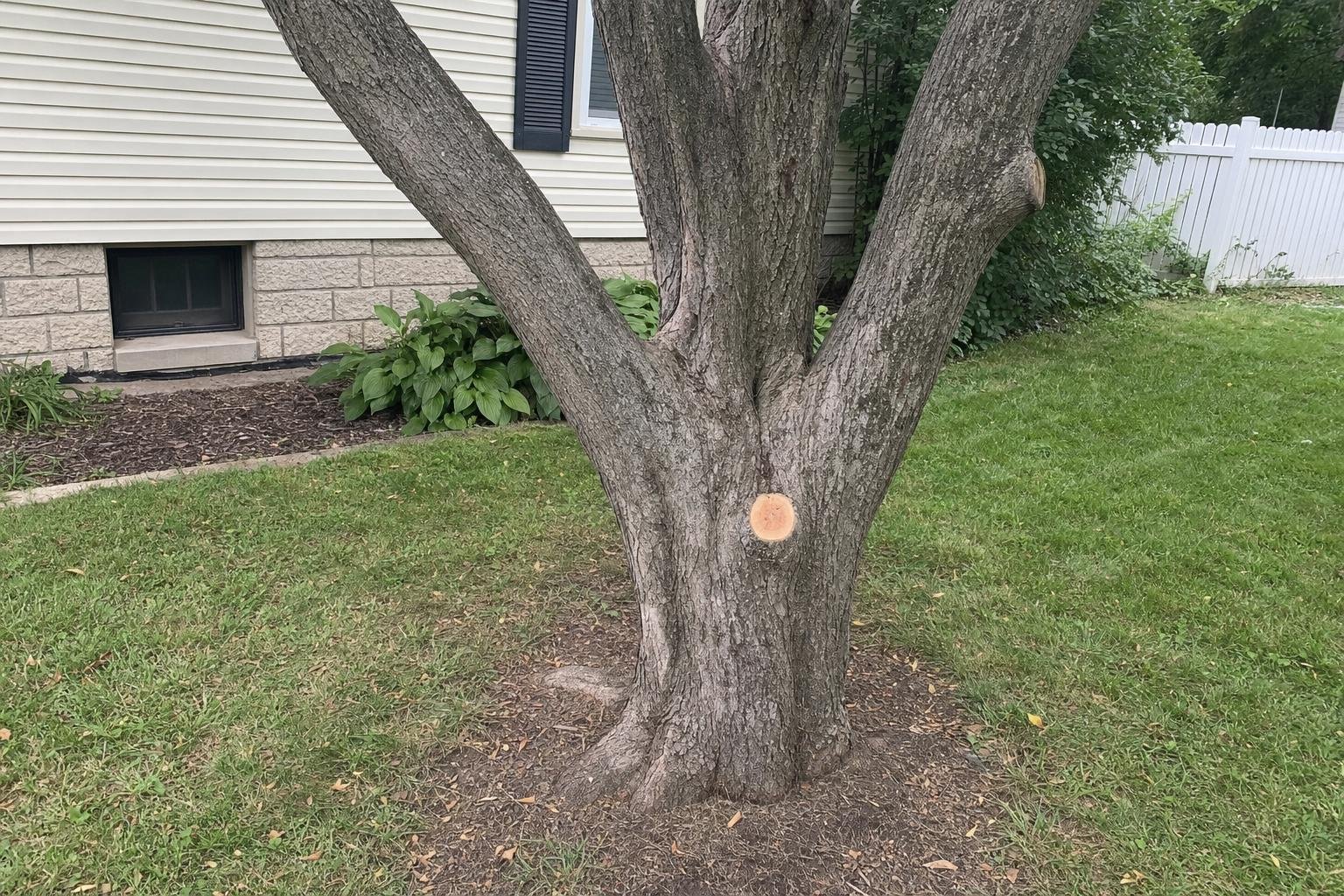
A heavy limb gets its first cut on the underside. A second cut farther out removes most of the limb, and the final cut leaves the collar at the trunk intact. That sequence keeps the limb from tearing bark off the trunk as it falls, which matters if the tree is staying.
Ready for the work itself? Read about tree removal. Need tree service in Dubuque? Start on our home page.
What do we check before the saws start?
Before work starts, every piece of climbing and cutting gear gets looked over, from the saws and ropes to the saddles, carabiners and lift equipment. Anything damaged or worn gets pulled from service.
Then we walk the ground. Fayette soils here drain well but can shed water fast, and on lower side slopes there can be shallow soil over limestone. A sloped yard isn't always easy to walk or dig, so we plan footing and equipment access before we plan the cut.
On river-bottom lots, we keep fuel and oily debris out of drainage paths. Floodplain runoff can reach the aquifer that feeds Dubuque's public wells.
Why do some removals take longer than others?
A tree with open space around it comes down faster than one boxed in by a roof, fence or wires, since the boxed-in kind has to come apart in sections. Once we've seen the tree, we'll tell you how long it should take.
Storm work is the slowest. Winters here run cold (zone 5A), so ice loading is something we plan around. Ice can break trees and snap power lines, and an ice-loaded tree has to be worked carefully because the weight isn't where it normally is.
If a stump is left, grinding it is a separate item. You decide that when you see the quote.
What does it cost?
Pruning costs $375 to $750 with the spread coming from tree size and the amount of wood that has to come off. Stump grinding runs $125 to $475 depending mostly on stump size and how easy it is to get a machine to it.
On the phone we can give you a typical range for your job. The exact number comes in writing after we've seen the tree, and you don't have to agree to anything on that first call. Removal pricing turns on the tree's size, what it's standing near and how it has to come down, which is why we want to see it first.
Does the city need to approve this?
Only if part of the tree stands in the public right-of-way. In that case the City Forester's permission comes before any cutting. A tree entirely on your property is your decision.
What's the next step?
Call or email with the tree's location and what's bothering you: a lean, dead branches, storm damage. Photos help if you have them. We'll set up a time to look at it and tell you plainly what it needs and what it'll cost. You can take the quote home and think it over.
Related Services
Straight Answers
Talk it through with us at (563) 227-0307, asking is free.
Updated November 2026